A diesel generator is a vehicle engine that never goes anywhere. It still needs oil changes, filters, coolant and a battery — but because it sits in a plant room and only earns its keep when the power fails, servicing is the first thing to slip. This is what a proper service on a commercial or industrial set involves, and the intervals we recommend for sets on the East Rand.
Key takeaways
- Service by running hours or calendar time, whichever comes first — a set that runs 20 hours a year still needs an annual service.
- Fuel quality is the number-one hidden risk on standby sets. Filters and tank condition matter more than most owners realise.
- A service is not complete without a run under load. Idling in the yard proves very little.
How often should a diesel generator be serviced?
Manufacturers publish their own schedules, and they should take priority, but for standby sets in the 100 kVA and up range the pattern is consistent:
| Interval | What gets done |
|---|---|
| Weekly / fortnightly | Visual check, test run (ideally 20–30 min under load), battery volts, fuel and coolant levels, leak check |
| Every 250 running hours or 6 months | Minor service: oil and oil filter, fuel filter(s), air filter inspection, belt tension, coolant test, battery and charger test, controller alarm review |
| Every 500 running hours or 12 months | Major service: everything above plus air filter replacement, coolant condition and concentration, valve clearance check where specified, alternator inspection, AVR and protection tests, changeover / ATS test, full load test |
| Every 2–4 years | Starter battery replacement, coolant replacement, hoses and belts, fuel tank inspection and cleaning |
Sets that run as prime power (daily, for hours) move through those hour-based intervals far faster and are serviced on hours alone.
The service checklist, step by step
1. Engine oil and oil filter
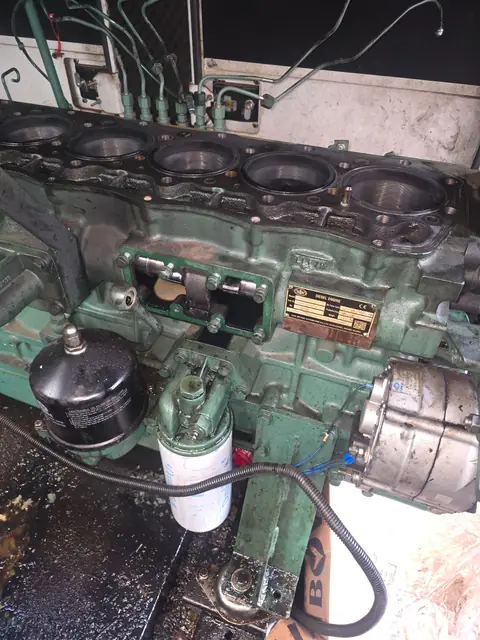
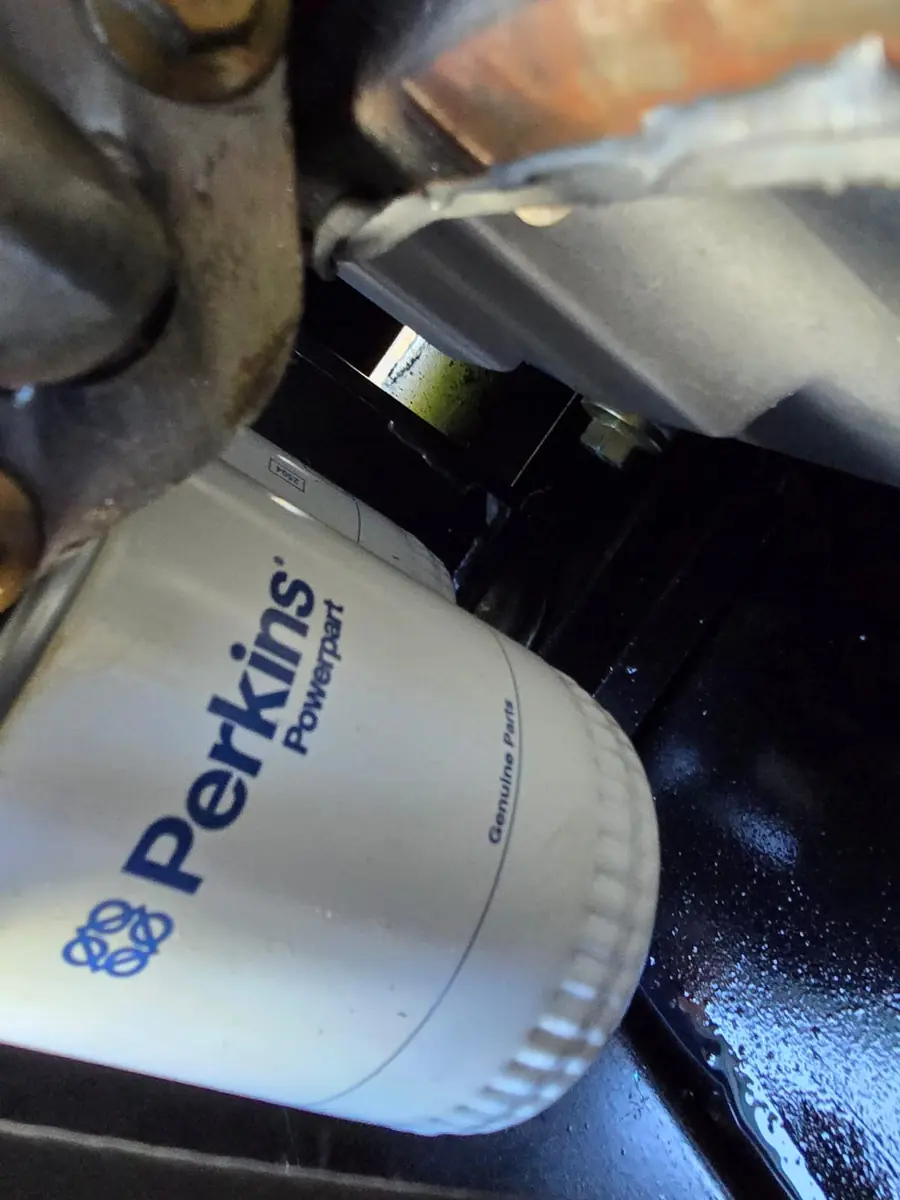
Diesel engines are hard on oil. Combustion by-products and soot load the oil with acids and abrasives even on a set that does not run often, and oil that has stood for a year has usually absorbed moisture. We drain hot, replace the filter with the correct grade for the engine — a genuine Perkins, Volvo or Cummins filter, not a lookalike — and refill with the specified oil.
2. Fuel filters, and the fuel itself
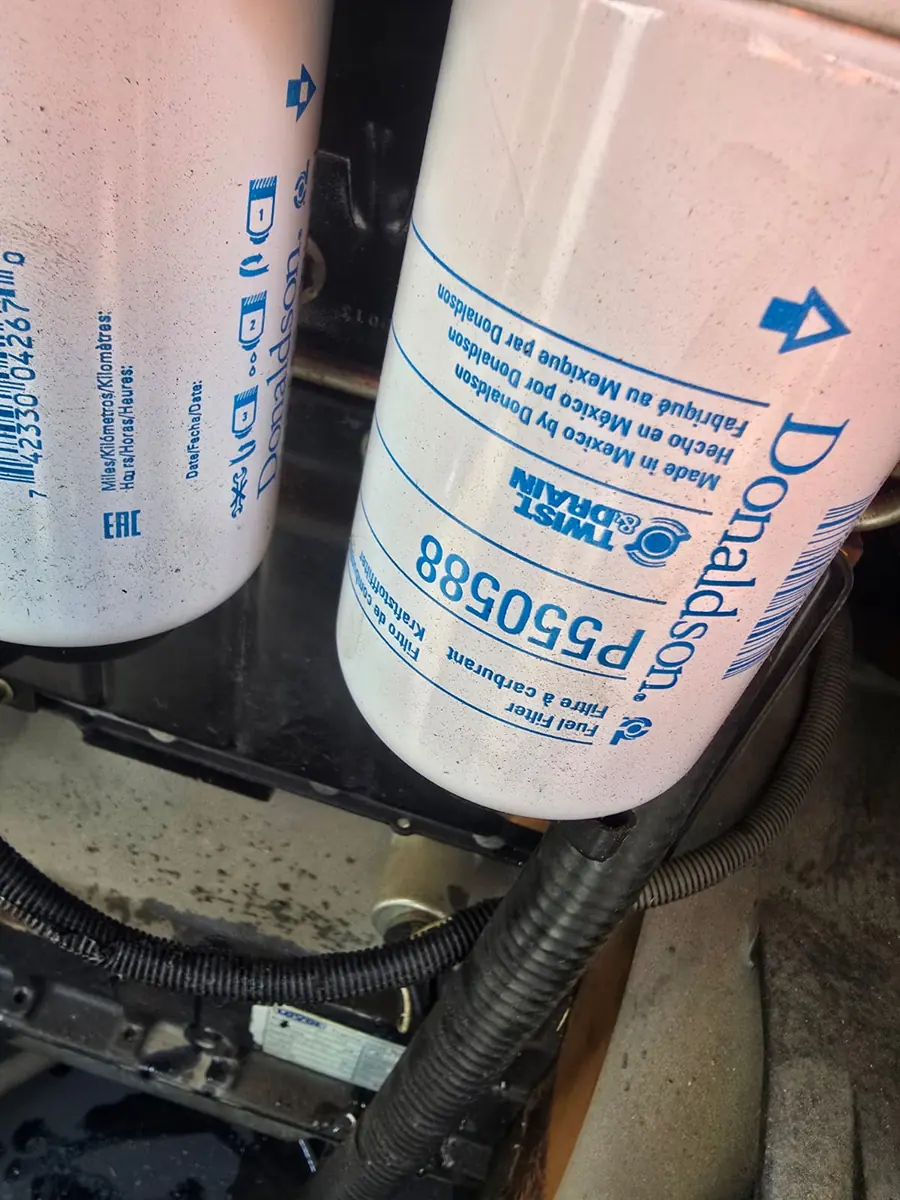
Diesel does not keep well. In a standby tank it can sit for a year or more, absorbing water from condensation and growing microbial sludge at the fuel–water interface. We replace primary and secondary fuel filters, drain the water separator, and inspect what comes out. Black sludge or a sour smell means the tank needs polishing or draining, or the set will simply block its new filters the first time it runs under load.
3. Air filter
Plant rooms on the East Rand are dusty places. A restricted air filter raises exhaust temperature and fuel consumption and drops output. We check the restriction indicator where fitted, inspect the element and replace it on the major service or sooner if it is loaded.
4. Cooling system
Coolant is tested for concentration and condition, hoses are checked for softness and cracking, the radiator core is cleaned of dust, and the fan belt is tensioned or replaced. Overheating is one of the top causes of protection shutdowns, and almost all of it is preventable at this step.
5. Starter battery and charger
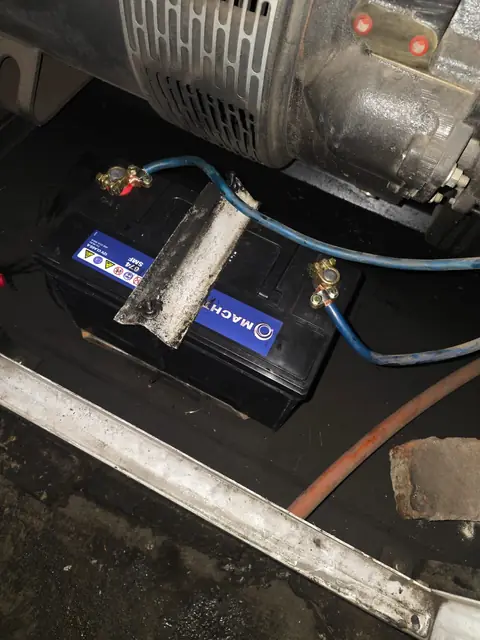
We load-test the battery, clean and protect the terminals, and confirm the panel charger is delivering a float charge. A battery that passes a simple voltage check can still fail a load test — which is exactly what it will do at 2 a.m. in an outage.
6. Injector pump, injectors and fuel lines
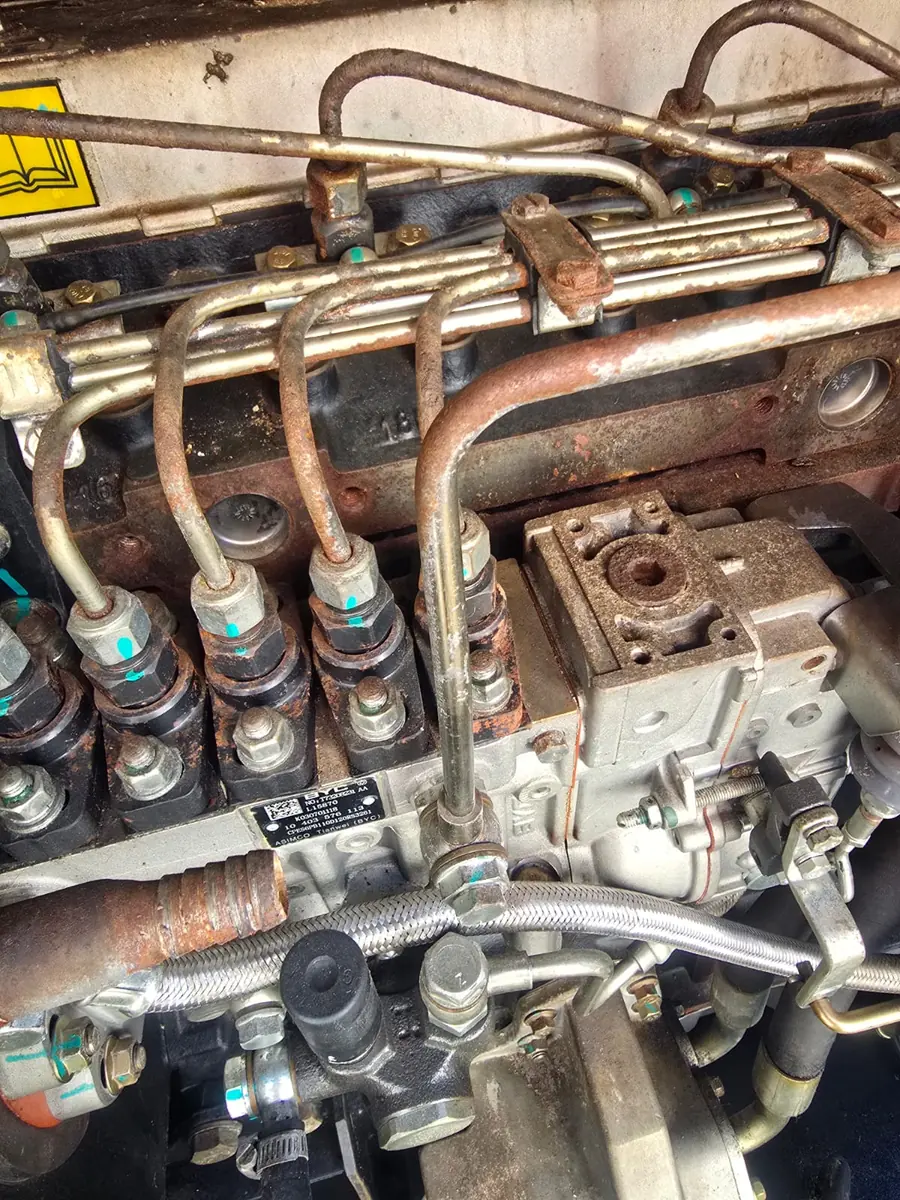
On the major service the fuel lines, injector pump and injectors are inspected for leaks, weeps and chafing. A weeping high-pressure line is a fire risk as well as a starting problem. Sets that hunt or smoke under load usually need the injectors looked at.
7. Alternator, AVR and protections
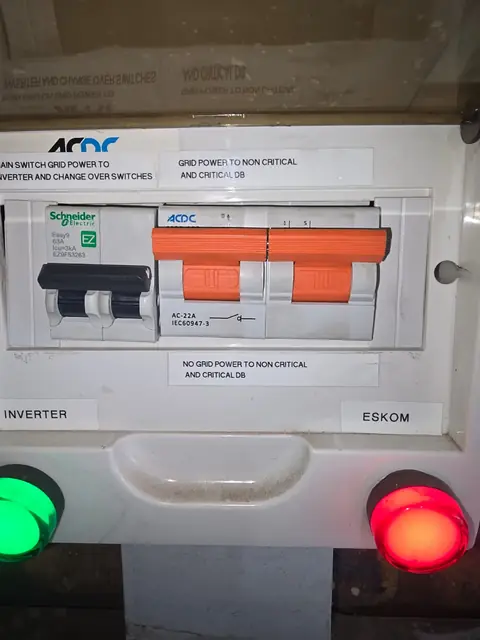
The electrical half of the set gets the same attention as the engine. We check the alternator windings and bearings, the rotating rectifier, the AVR settings and connections, and the output breaker. Voltage and frequency are verified under load. On sets with an automatic transfer switch, the ATS is tested end to end by simulating a mains failure — a test that should never be skipped, because it is the part of the system the business actually depends on.
8. Controller alarm review and settings
The controller log is a maintenance history in its own right. Repeated low-battery warnings, a high-temperature shutdown from six months ago, or an overcrank event all point to problems that a quick service would otherwise miss. We review the log, clear old alarms, and confirm the set is left in Auto.
9. Load test
Finally the set runs under load — either the building load or a portable load bank — for long enough to reach operating temperature. This is where marginal fuel systems, tired batteries and cooling problems show themselves, and it also burns off the carbon build-up (“wet stacking”) that diesels accumulate from running lightly loaded.
Why both trades matter. A generator service is half mechanical and half electrical. Our technicians are qualified on both sides, so the same visit covers the engine, the alternator, the AVR and the changeover — and the service report you receive covers all of it.
Talk to the team that does this work
Free quotes, straight answers and SANS 10142-compliant workmanship across the East Rand and Sandton. Call, WhatsApp or request a quote online.
What a service report should tell you
You should receive a written record of oil and filter part numbers, battery test results, coolant condition, running hours at service, any alarms found, and test-run results (voltage, frequency, load). If a service provider can’t tell you what the battery load test showed, the battery wasn’t load-tested.
Servicing on the East Rand
Electromech services and repairs diesel generator sets rated 100 kVA and up for commercial and industrial clients across the East Rand and into Sandton. Whether it is a single set behind a shopping centre in Boksburg, a factory standby in Germiston or an office block in Sandton, we can put the set on a service schedule and keep the paperwork straight. Start with our generator repairs and servicing page, or if you are planning a new installation, read our guide to backup generator installation.
Frequently asked questions
Can I service a generator myself?
Basic checks — levels, battery volts, test runs — are reasonable for site staff. Oil, filters, fuel-system bleeding, AVR and ATS testing should be done by a technician, both for safety and because a badly bled fuel system or an untested changeover creates exactly the failure you were trying to prevent.
Does a standby generator need servicing if it hardly runs?
Yes. Oil degrades with time, batteries sulphate, diesel grows bugs and seals dry out whether the engine runs or not. Calendar intervals exist for precisely this reason.
Do you service petrol or small portable generators?
No — our generator work is focused on diesel sets rated 100 kVA and up for commercial and industrial premises.