Every diesel engine eventually wears out. On a standby generator that has been well looked after that can take decades; on a set that has run hot, run dirty or run without oil changes it can happen far sooner. When the symptoms of a tired engine appear, the owner faces a real decision: overhaul the engine, or replace the set. Here is how we approach it.
Signs the engine itself is the problem
Plenty of generator faults are peripheral — a battery, a filter, an AVR. A worn engine shows a different set of symptoms:
- Blue or white smoke at start-up and under load, and rising oil consumption between services.
- Loss of power: the set can no longer carry a load it handled comfortably a year ago, and the frequency sags.
- Low compression on one or more cylinders, confirmed with a compression or leak-down test. Hard starting in the cold is a classic early sign.
- Crankcase blow-by — pressure and oil mist pushing out of the breather.
- Persistent overheating that survives a new thermostat, clean radiator and fresh coolant, pointing to a cracked head or failed head gasket.
- Coolant in the oil or oil in the coolant, or a knock that changes with load.
Any one of these on its own may have a simpler cause. Several together usually mean the engine needs to come apart.
What an overhaul actually involves
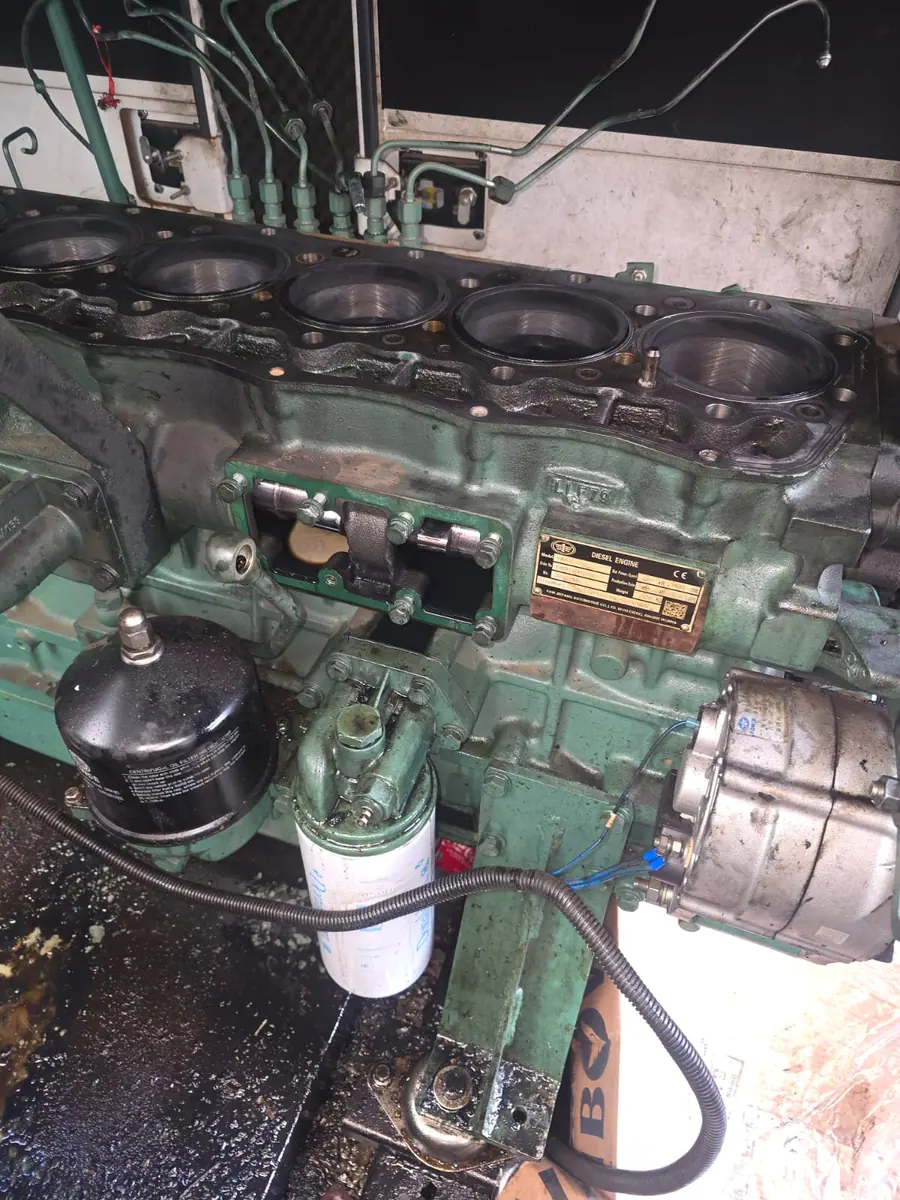
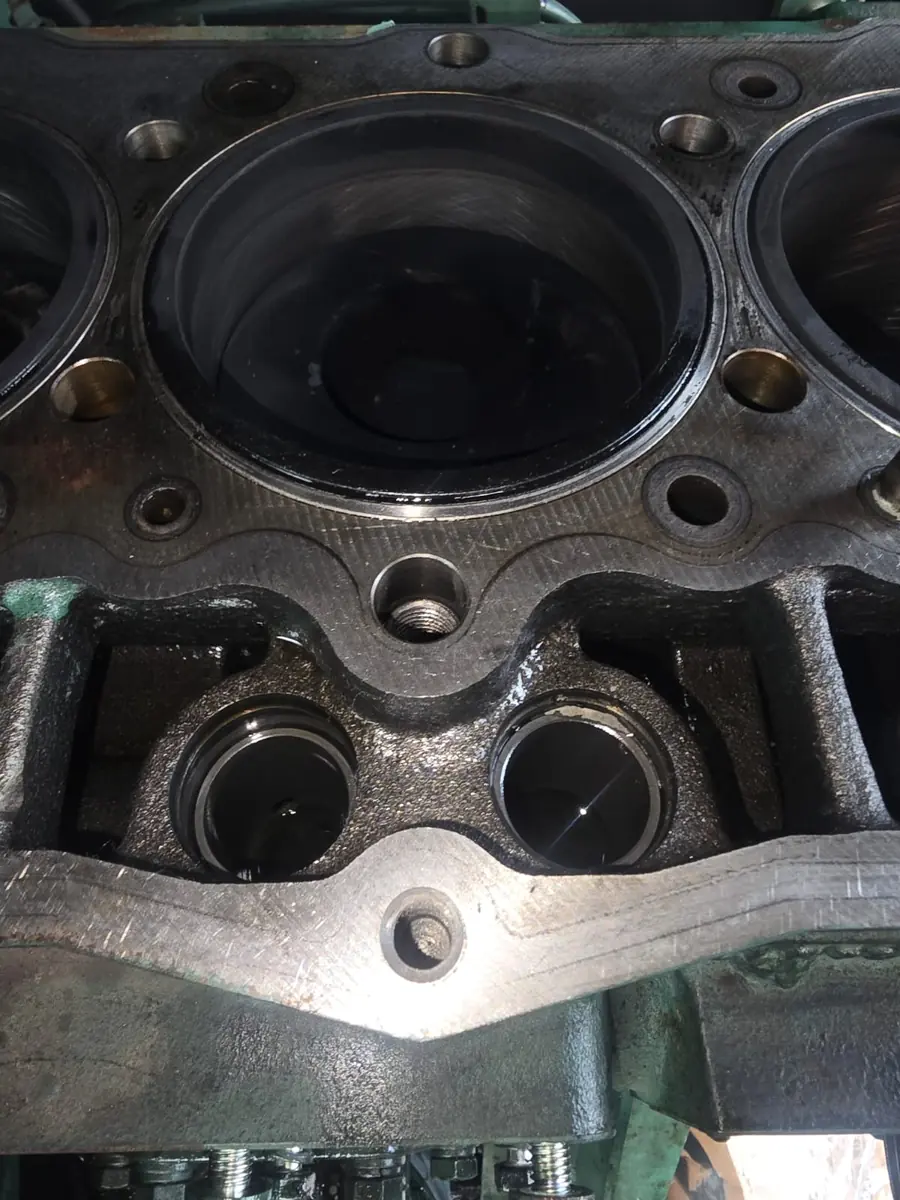
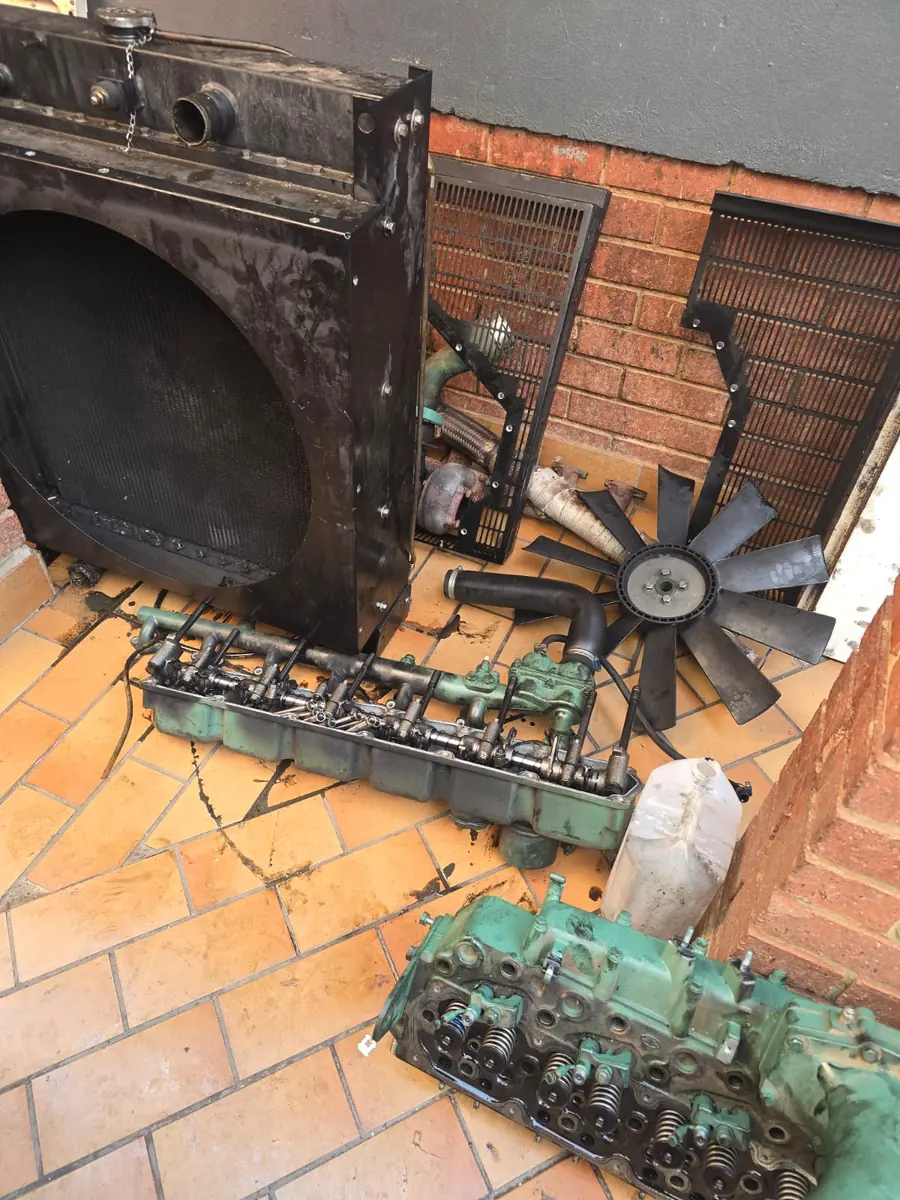
A top-end overhaul deals with the cylinder head: valves, seats, guides, injectors and the head gasket. A full overhaul goes further — liners, pistons, rings, bearings, and a reconditioned or replaced injector pump. On the set pictured below, a 4-cylinder diesel that had been overheating and losing compression, the head came off to reveal scored liners that made a full rebuild the only sensible route.
The work runs roughly in this order:
- Strip and assess. The radiator, fan, manifolds, injector pump and cylinder head come off. Everything is measured — bore wear, crank journals, valve seats — against the manufacturer’s limits.
- Machining and parts. Liners are replaced or bored, the head is pressure-tested and skimmed, valves and seats are cut or replaced. Bearings, rings, gaskets and seals go in new. Where the injector pump is worn it is reconditioned by a specialist.
- Cooling system. The radiator is rodded out or re-cored, the water pump and thermostat replaced. There is no point rebuilding an engine and bolting the cause of the overheating back on.
- Reassembly and setting up. Torque sequences, valve clearances, injector timing and the fuel system are set to specification.
- Run-in and load test. The engine is run in under increasing load, oil and filters are changed again after the run-in period, and the set is load-tested and handed back with a report.
Talk to the team that does this work
Free quotes, straight answers and SANS 10142-compliant workmanship across the East Rand and Sandton. Call, WhatsApp or request a quote online.
Overhaul or replace? The questions that decide it
How is the rest of the set?
An engine overhaul makes sense when the alternator, the base frame, the control panel, the fuel tank and the canopy are all sound. If the alternator windings are tired and the controller is obsolete, you may be rebuilding one third of a set that is worn out in all three.
Are parts available?
Engines from Perkins, Volvo, Cummins, Scania and similar mainstream manufacturers have excellent parts support in South Africa. Some obscure engine brands do not, and a rebuild that waits four months for pistons is not a rebuild the business can afford.
What does the set need to do?
If the load has grown since the set was installed — a new cold room, a new production line — the answer may be a correctly sized replacement rather than a rebuilt engine that was already marginal. Our backup generator installation guide covers how sizing is done.
What is the downtime?
A full overhaul takes the set out of service for a period, with parts lead times on top. If the site cannot be without standby power, we can arrange a temporary set for the duration — but that cost belongs in the comparison.
What do the numbers say?
As a rule of thumb, an overhaul is worth doing when it costs well under half the price of an equivalent new set and the rest of the machine has years of life left. Above that, or on very old sets, a replacement usually wins on reliability and warranty alone. We will give you both figures and an honest recommendation — sometimes the honest answer is “replace it”.
Avoiding the overhaul in the first place
Most premature engine failures on standby sets come back to three things: overheating from a neglected cooling system, running on contaminated fuel, and skipped oil changes. All three are covered in our generator servicing checklist. A set on a proper service schedule, test-run under load, will rarely need to see the inside of our workshop.
Our scope. Electromech overhauls, repairs and services diesel generator sets rated 100 kVA and up, with technicians qualified in both the electrical and mechanical trades. We work across the East Rand — Boksburg, Benoni, Germiston, Kempton Park, Alberton, Bedfordview — and into Sandton.
Frequently asked questions
How long does a generator engine overhaul take?
Depending on parts availability and the extent of the rebuild, from a week or two for a top-end overhaul to several weeks for a full rebuild including machining. We give a realistic timeline with the quote.
Can you overhaul the engine on site?
Top-end work is often done on site. A full overhaul with machining generally means removing the engine, or the whole set, to the workshop.
Will an overhauled engine be as good as new?
Done properly, with the cooling and fuel systems restored at the same time, a rebuilt engine returns to its rated output and can run for many more years. It is still an older set with an older alternator and controller, which is why we look at the whole machine before recommending it.