The distribution board is the one part of a home’s electrical system that everyone has looked at and almost nobody understands. It is also the part most likely to be decades old. A great many homes across the East Rand — in Primrose, Northmead, Sunward Park, Edleen, Brackenhurst and dozens of other older suburbs — are running modern loads through boards fitted when a house had one geyser, a stove and a handful of plugs.
Why the board matters
The DB does two jobs. It distributes power to the circuits in the house, and it protects those circuits — and you — from overload, short circuit and electric shock. Circuit breakers stop cables overheating and starting fires; the earth-leakage unit detects current leaking to earth (through a person, a faulty geyser element or wet wiring) and cuts the supply in milliseconds. An old board does the first job badly and often does the second not at all.
The seven warning signs
1. Nuisance tripping
The earth leakage or a breaker trips when the geyser comes on, when the kettle and the microwave run together, or for no reason you can find. Sometimes the cause is a faulty appliance; just as often it is an aged earth-leakage unit, a circuit that is carrying far more than it was designed for, or moisture in old wiring. A board that trips regularly is telling you something.
2. Ceramic fuses or very old breakers
If your board still has rewirable ceramic fuses, or the big black or brown breakers of the 1970s and 80s, it predates the protection standards that a modern home relies on. Rewirable fuses in particular are a fire risk — they are routinely “repaired” with the wrong wire.
3. No earth-leakage unit — or one that doesn’t trip on test
Press the test button. If nothing happens, or there is no test button because there is no unit, the installation offers no protection against electric shock and will fail a COC inspection.
4. Warmth, discolouration, buzzing or a burning smell
A breaker or busbar that is warm to the touch, brown discolouration around terminals, a buzzing sound, or a hot “electrical” smell all point to a loose or overloaded connection. Heat at the board is a fire in the making and needs attention now, not next month — see what counts as an electrical emergency.
5. No spare ways, and circuits doubled up
Two or three cables crammed under one breaker terminal is a sign that circuits have been added over the years without space for them. Air conditioners, a second geyser, a pool pump and outdoor lighting each deserve a dedicated, correctly rated circuit.
6. Nothing is labelled
If nobody can say which breaker feeds the kitchen, the board is unsafe to work on and will not pass a COC. Labelling sounds trivial; it is a compliance requirement and it matters in an emergency.
7. You are adding backup power or solar
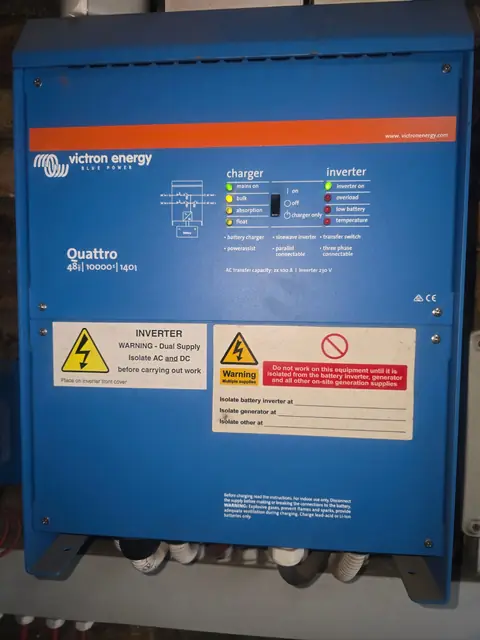
An inverter or generator changeover needs the board split into essential and non-essential circuits, with the changeover and protection wired in properly. Most old boards simply cannot accommodate this, and forcing it in produces the unsafe, non-compliant backup wiring we regularly find on COC inspections.
What a modern DB board includes
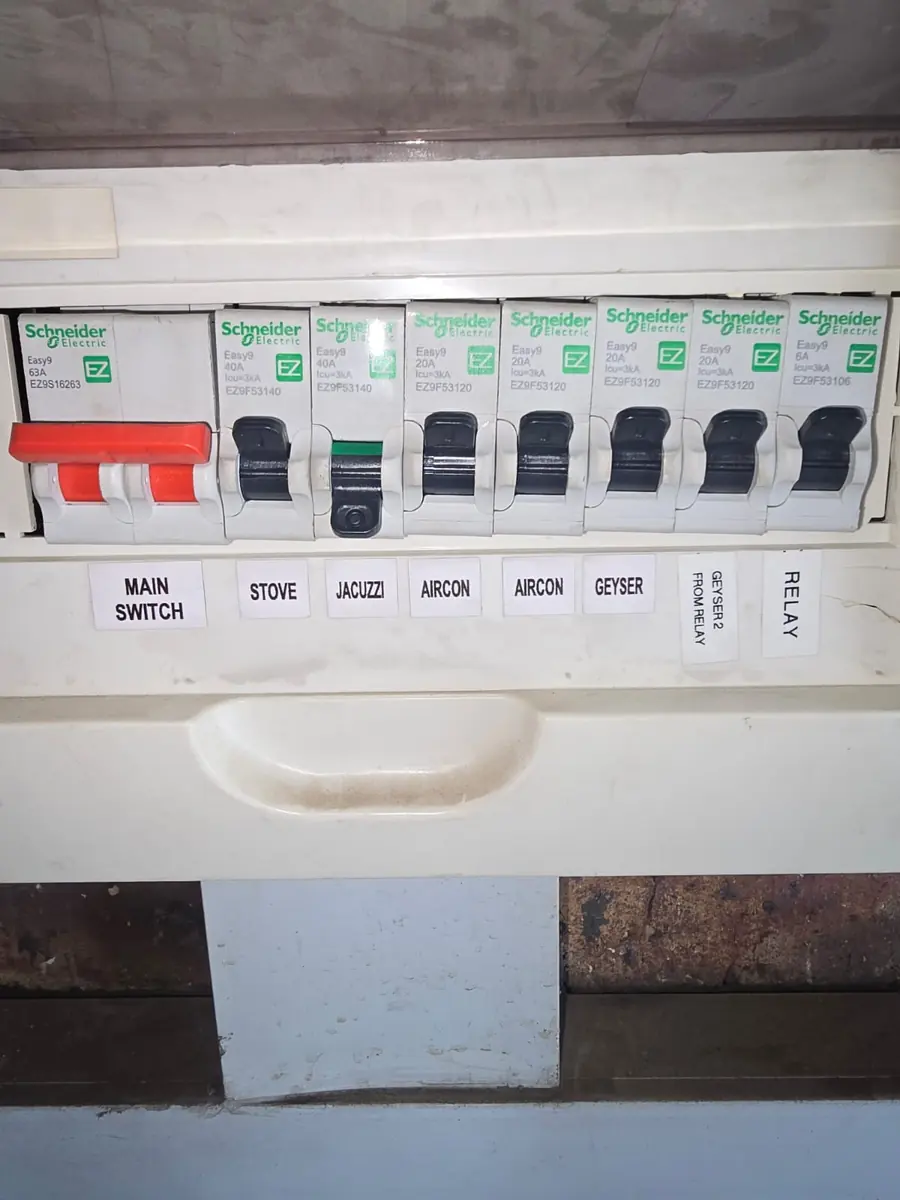
- A main switch / isolator rated for the supply, so the whole installation can be isolated in one action.
- Earth-leakage protection (30 mA) covering the socket and lighting circuits, tested with an instrument at commissioning.
- Surge protection — increasingly standard on the Highveld, where lightning damage to electronics, inverters and appliances is a real cost.
- Correctly rated miniature circuit breakers for each circuit — the breaker protects the cable, so a 20 A breaker on 1.5 mm² lighting cable is not protection at all.
- Dedicated circuits for the stove, geyser, air conditioners, jacuzzi or pool pump, and outbuildings.
- Spare ways for future additions, and a board large enough to keep the wiring tidy.
- Clear labelling of every circuit, plus a circuit chart inside the door.
- Provision for backup power: an essential-circuits section and space for a changeover if you plan to add an inverter, batteries or solar.
Quality brands — Schneider, ABB, CBI and similar — cost slightly more than no-name breakers and are worth it. A breaker that does not trip when it should is the most expensive component you will ever buy cheaply.
Talk to the team that does this work
Free quotes, straight answers and SANS 10142-compliant workmanship across the East Rand and Sandton. Call, WhatsApp or request a quote online.
Upgrade, or rewire?
Replacing the board fixes the protection and the labelling. It does not fix wiring that is perished, undersized or full of illegal joints. During a board upgrade our electricians test each circuit — insulation resistance, earth continuity — and tell you honestly whether the cabling behind the board is sound. In many 1960s–80s homes the answer is a DB upgrade now and a planned partial rewire later; in some it is a rewire, full stop. Our rewiring and DB boards page explains both.
What the upgrade involves
- Survey and quote. We look at the existing board and wiring, count circuits, note what you plan to add (aircon, inverter, solar) and quote a board sized for it.
- Isolation and replacement. The supply is isolated, the old board removed, the new enclosure fitted and every circuit reconnected onto a correctly rated breaker.
- Testing. Earth-leakage trip test, earth continuity, insulation resistance and polarity on every circuit.
- Labelling and COC. The board is labelled and a Certificate of Compliance issued for the new work.
A straightforward residential board is usually done in a day, with power off for a few hours in the middle.
East Rand DB board upgrades. Electromech replaces and upgrades distribution boards for homes and businesses across Boksburg, Benoni, Kempton Park, Germiston, Bedfordview and Alberton, and issues the COC on completion. Get a free quote through our rewiring and DB boards page, or call 073 087 5986.
Frequently asked questions
How much does a DB board upgrade cost?
It depends on the number of circuits, the size of the board, whether surge protection and a backup section are included, and the condition of the wiring behind it. We quote after seeing the board — there are no standard prices that would be honest.
Will I need a COC after a DB board upgrade?
Yes. A new board is an alteration to the installation and is certified on completion. This certificate is also what you will need when you sell.
Can I upgrade the board myself?
No. Work on the fixed installation must be done by a registered electrician and certified. A DIY board will fail the COC and can void your insurance.