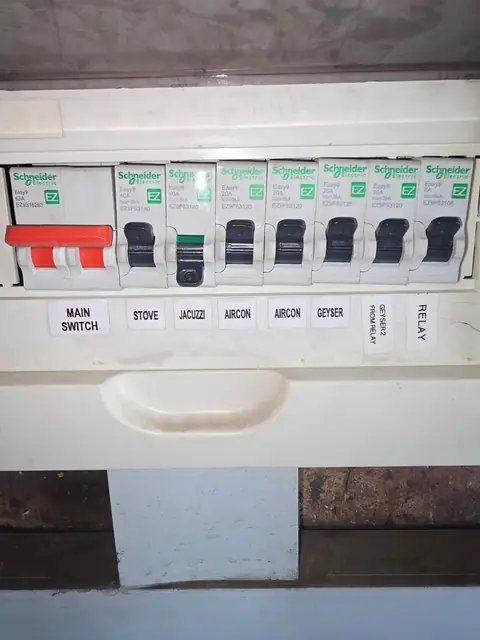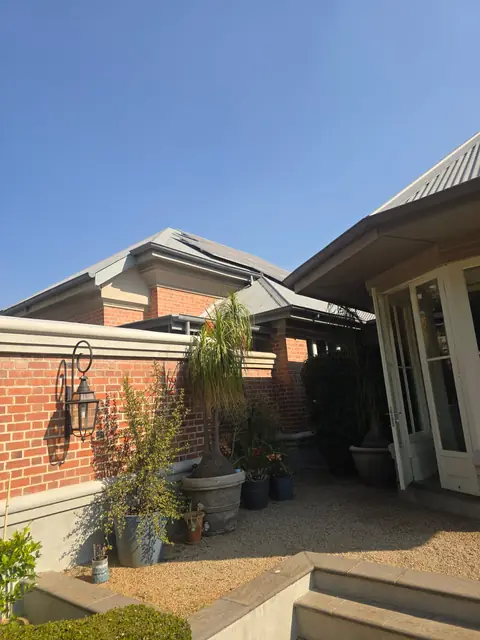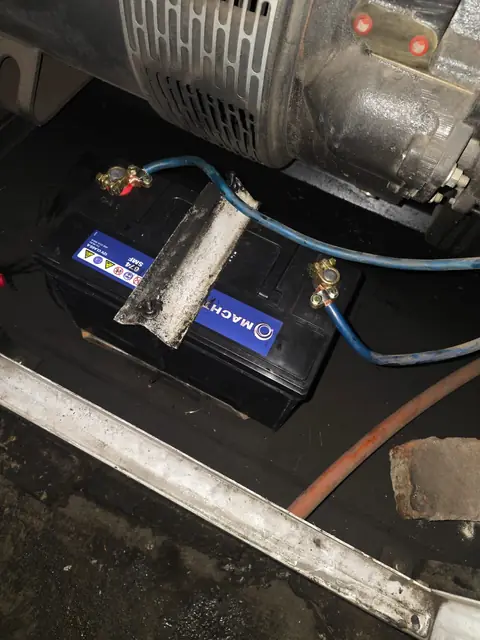
We run a 24-hour emergency line across the East Rand, and the calls fall into two groups: the ones where we tell the caller to switch off the main and we leave immediately, and the ones where we say “that can wait until the morning, and it’ll cost you less”. Knowing which is which keeps you safe and saves you an after-hours call-out fee you didn’t need to pay.
Genuine emergencies: call now
These situations carry a real risk of fire or electrocution and should not wait:
- Burning smell, smoke or scorching at the DB board, a socket, a switch or an appliance point. Heat at an electrical connection is how electrical fires start.
- Sparking or arcing — visible sparks from a socket, a light fitting or inside the board, or a crackling, buzzing sound from the DB.
- A shock from a tap, a geyser, a metal appliance or a wall. This means the earthing has failed and something is live that should not be. Do not touch it again; switch off the main.
- Exposed live wiring — a cable cut by a contractor, storm-damaged overhead cable, a socket pulled off the wall, a chewed cable in a roof space.
- Water and electricity together: a flooded room with sockets at floor level, a leaking geyser dripping onto the DB, a roof leak over a light fitting.
- The main switch or earth leakage trips and will not reset, leaving the property without power, and you cannot identify a faulty appliance as the cause.
- Total power loss in your property only — the neighbours have power, the prepaid meter has units — which points to a fault at your supply, main switch or board.
- A business that cannot trade or operate safely: a cold room without power, security systems down, a factory with a tripped main.
What to do in the first five minutes
- Switch off the main switch at the DB if there is any sign of burning, sparking or shock, and it is safe to reach the board. If the board itself is smoking, do not touch it — leave the building and call.
- Keep people and pets away from the affected area and anything metal connected to it.
- Do not use water on an electrical fire. If a fire has started, use a dry-powder or CO₂ extinguisher if you have one and it is safe; otherwise get out and call emergency services first.
- Unplug appliances on the affected circuit if you can do so safely — a faulty kettle, heater or geyser element is often the cause of repeated tripping.
- Call us and describe what you see and smell, where it is, and what you have switched off. That tells us what to bring.
Shock from a tap or a shower? Switch off the main immediately and do not use any water outlet until the earthing has been checked. This is one of the most dangerous faults a home can have and it is always an emergency.
What can safely wait for the morning
These are annoying, not dangerous, and booking a normal-hours call-out is the sensible choice:
- A single dead socket or light, with no smell, heat or discolouration.
- A geyser that has stopped heating (switch it off at the isolator and wait).
- A gate motor, pool pump or outdoor light that has stopped working.
- A circuit that tripped once, reset, and has stayed on.
- Flickering lights on a single circuit.
- Planning work: extra sockets, a DB board upgrade, a COC for a sale.
A recurring theme in emergency calls is an old board that has been trying to tell its owners something for months — nuisance tripping, a warm breaker, a smell that comes and goes. If that describes your home, the cheapest emergency is the one you prevent with a board inspection.
Talk to the team that does this work
Free quotes, straight answers and SANS 10142-compliant workmanship across the East Rand and Sandton. Call, WhatsApp or request a quote online.
Why the earth leakage keeps tripping — and why it matters
The earth-leakage unit trips when it detects current leaking to earth — through a faulty geyser element, a damp outdoor socket, a damaged cable, or a person. When it trips repeatedly, it is doing its job. The right response is to find the leak, not to bypass the unit; a home where someone has “sorted the tripping” by removing the earth leakage has no shock protection at all. Our electricians trace earth faults circuit by circuit with an insulation tester; see our electrical repairs page.
Storm season on the Highveld
Summer storms bring lightning strikes, power surges when the supply is restored, and damage to overhead cables. After a storm, common emergencies are a DB that won’t reset because a surge has damaged the earth-leakage unit, burnt-out inverters and electronics, and cables brought down in the garden. Surge protection at the DB is the single most cost-effective defence, and something we fit routinely during DB board upgrades.
What happens when you call the emergency line
You speak to an electrician — Marthunis or Ruben — not a call centre. We will ask what is happening, tell you what to switch off, and give you a realistic arrival time. On site, the first job is to make the installation safe: isolate the fault, secure any exposed wiring, restore power to the circuits that are safe to run. If the permanent repair needs parts or daylight, we tell you so and come back to finish it properly rather than patching it in the dark. Emergency work is done to the same SANS 10142-1 standard as everything else.
24/7 across the East Rand. Electromech’s emergency electricians cover Boksburg, Benoni, Kempton Park, Germiston, Bedfordview, Alberton and Sandton. Call 073 087 5986 any time — see our emergency electrician page for what we handle.
Frequently asked questions
Does an emergency call-out cost more?
After-hours work generally carries a call-out fee, which we confirm on the phone before we leave. For faults that can safely wait, we will tell you so and book a normal-hours visit instead.
My prepaid meter has units but there is no power — is that an emergency?
Check your main switch and earth leakage first. If they are on and there is still nothing, and your neighbours have power, the fault is at your supply or board and should be looked at promptly.
The whole street is off — should I call an electrician?
No — that is a municipal outage; report it to the municipality. An electrician cannot restore a supply that has failed upstream of your meter.